
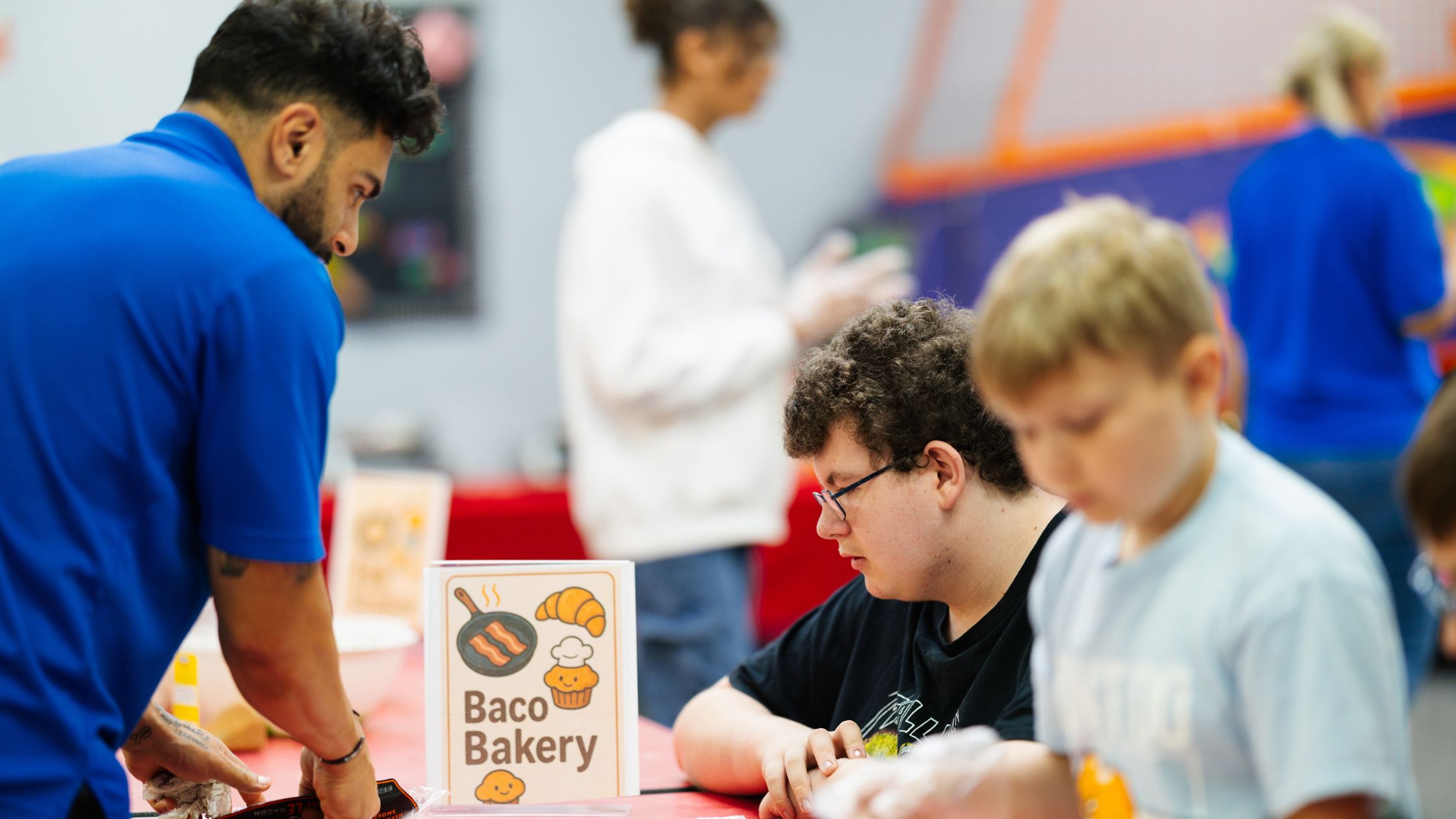
Predictable routines have always been essential to helping humans feel safe, calm, and confident, regardless of whether someone is considered neurotypical or neurodivergent. So, it’s no surprise that when classroom environments lack predictable routines or lean toward noisy, disruptive environments, all students are more prone to feeling anxious and scattered—negatively impacting their ability to learn and eroding their sense of self.
That’s why Legacy High School in Melbourne, FL, prioritizes seasonal rhythms, classroom structure, and predictable daily routines. As leaders in the field of neurodivergent education, our calm classroom environments and predictable daily rhythms provide the foundation for children to thrive. Let’s take a closer look at a few of the ways we support our student community.
1. Predictable Routines Foster Student Safety & Success
A recent article published on teachhub.com states, “Learners thrive in environments where there’s structure and familiarity, and implementing classroom routines provides students with a sense of predictability, where they feel safe and secure in the classroom.” Their statement is supported by multiple studies linking academic success to students’ feelings of safety and value in the classroom.
While the faculty and staff at Legacy High School specialize in educating neurodivergent populations, we know firsthand that the educational environments we create — pairing structure and routine with personalized attention — benefit all students regardless of whether they have a neurodivergent diagnosis. The benefits of structure in education, partnered with a predictable school environment, shine through in academic performance, social skills, and readiness for adult life.
2. Consistent School Schedules Without Long Lapses
Most traditional public school models adopt academic calendars with significant disruptions, including winter, spring, and summer breaks. While well-intentioned, these significant lapses mean students have an abrupt shift in their daily rhythm and routine. This is evidenced by what many administrators and educators refer to as “the summer slide,” which includes more than just a dip in academic achievement.
The windows leading up to a holiday and those first weeks back to school are typically fraught with emotional and behavioral upsets, witnessed both in the classroom and at home. By honoring a year-round, 12-month (July to June) schedule, Legacy High School students benefit from consistent daily rhythms throughout the year. This keeps them in the same predictable daily flow, helping them learn what to expect.
3. Calm Classroom Environments Reduce Agitation & Distractions
When was the last time you stepped into a public classroom? If you’ve been in one recently, odds are you were met with loud voices, constant motion, and distracting behaviors, none of which foster a healthy learning environment. These are triggering environments for any student, regardless of whether they are more suited to neurodivergent education modalities.
Most adults feel exhausted after just a single hour in a typical public school classroom, so imagine what it’s like for your child. It’s no wonder most of our students come to us after years of feeling anxious, scattered, and completely burned out at the sheer unpredictability of a chaotic, noisy classroom environment. The World Health Organization writes that “…less than 35 dB(A) in classrooms to allow good teaching and learning conditions.”
Yet, studies cited by eschoolnews.com show that “The average volume of a classroom, however, rings in at more than twice that level. At 77 decibels, the average classroom produces the same level of noise as freeway traffic or other ‘annoyingly loud’ sounds.” This level of noise is absolutely unacceptable, and yet it has become the educational norm despite increased awareness of how sensory overload negatively impacts students.
We suspect that the simple act of restoring structure, routines, and quiet to the classroom would go a long way towards reducing the number of IEPs required by students across the board. And, while we can’t do anything about other schools’ environments, Legacy High School makes calm classrooms the norm. If and when projects or events require elevated noise levels, students always have the option to use noise-canceling headphones or take advantage of other personalized solutions to ensure their needs are respected.
4. Daily Routines Foster Independent Competence
Establishing predictable daily routines is another step in reducing general anxiety and supporting students as they develop independent competence. When children learn what is expected of them and how to navigate the processes to achieve reasonable expectations, they feel increasingly competent. These consistent structures and predictable routines provide a real-life example of “practice makes (almost) perfect.”
Students benefit from a newfound sense of security that diminishes any anxiety-driven reactivity or upsets that can occur when every day feels like a different landscape to navigate. This newfound security in the school day catalyzes a shift from the nervous system’s survival-based fight/flight/freeze mode to a more natural state that allows children to experience extended periods of calm focus.
Examples of how we create predictability from day to day include:
- Expectations for entering and leaving the classroom or learning space.
- Routines that support transitions from one subject to another, one activity to the next, or between spaces.
- Knowing how to signal for teacher/staff attention and what the quality of that attention will feel like (this is essential to Legacy High School and is the reason our small classrooms ensure a 1:10 teacher/student ratio).
- Establishing protocols for submitting class work and homework, as well as how to work in pairs or groups (as relevant to the student and class).
- Always feeling confident in what comes next in the school day and week, so there are very few surprises.
By establishing, practicing, and honing routines, our students feel secure in what is expected of them and the steps required to achieve their goals.
5. Personalized Education Strategies Further Support Long-Term Goals
Structure, predictable routines, and calm learning environments benefit the student body as a whole. However, we can never forget that “the whole” is the sum of multifaceted parts. To that end, Legacy High School celebrates each student’s uniqueness by providing a personalized neurodivergent education model.
We like to say that education is more than just imparting knowledge; it’s about nurturing growth, building confidence, and empowering students to explore their unique potential. There is no “one size fits all” education method for helping students explore and unlock their unique potential. Instead, it requires educators dedicated to personalizing the student’s learning path.
This looks like:
- Identifying their strengths and the areas where they need more support.
- Setting achievable goals and a clear path towards them.
- Providing positive, constructive feedback.
- Creating flexible learning environments.
- Encouraging self-reflection and a growth mindset.
- Investing in vetted tools and support programs.
- Fostering community and collaboration.
Our faculty and staff get to know our students as individuals, including their interests and goals. From there, we can begin to create personalized education strategies that further support their growth, success, and self-confidence. Only when a child feels confident in themselves and their abilities can they begin to envision—and dream about—their future path.
6. Teaching Real-Life Skills For A Promising Future
The purpose of education is to help children unlock their gifts and find ways to use them as participating members of society. The only way to do that is to embed real-life skills into the academic curriculum. Without this additional step, children can wind up being very successful in the classroom, but without any realistic application for that success in the world beyond.
In addition to the academic curriculum, Legacy High School students master practical life skills, helping them feel more confident about their ability to live independently after graduation.
By teaching our students real-life skills, they benefit from:
- Improved health and well-being (they learn they can’t live on noodles alone!).
- Applicable financial literacy and responsibility.
- Home skills for independent living.
- Employability and career readiness.
- Critical thinking and problem-solving skills.
These are the skill sets every young adult deserves, and we make sure our students are equipped to meet the challenges of post-graduation life.
Legacy High Provides Neurodivergent Education For Life In A Neurotypical World
While your child may be labeled as neurodivergent or twice exceptional, they deserve to have an education that sets them up for success in the neurotypical-centric world. To that end, Legacy High School provides the structures, routines, and nurturing educational environment that ensures our students experience calm, anxiety-free learning zones.
Regardless of your child’s diagnosis or labels, our consistent approaches support their mental clarity and focus, strong sense of self, and experience-based growth mindsets that foster academic (and social) success. We created Legacy High School to offer a neurodivergent education platform that honors the whole child and prepares them for real-world success.
If you are seeking an alternative high school in Melbourne, FL, loved by local families, you may have found your teen’s new academic home here. Get in touch with Legacy High School to learn more about our exceptional program and start your application.