
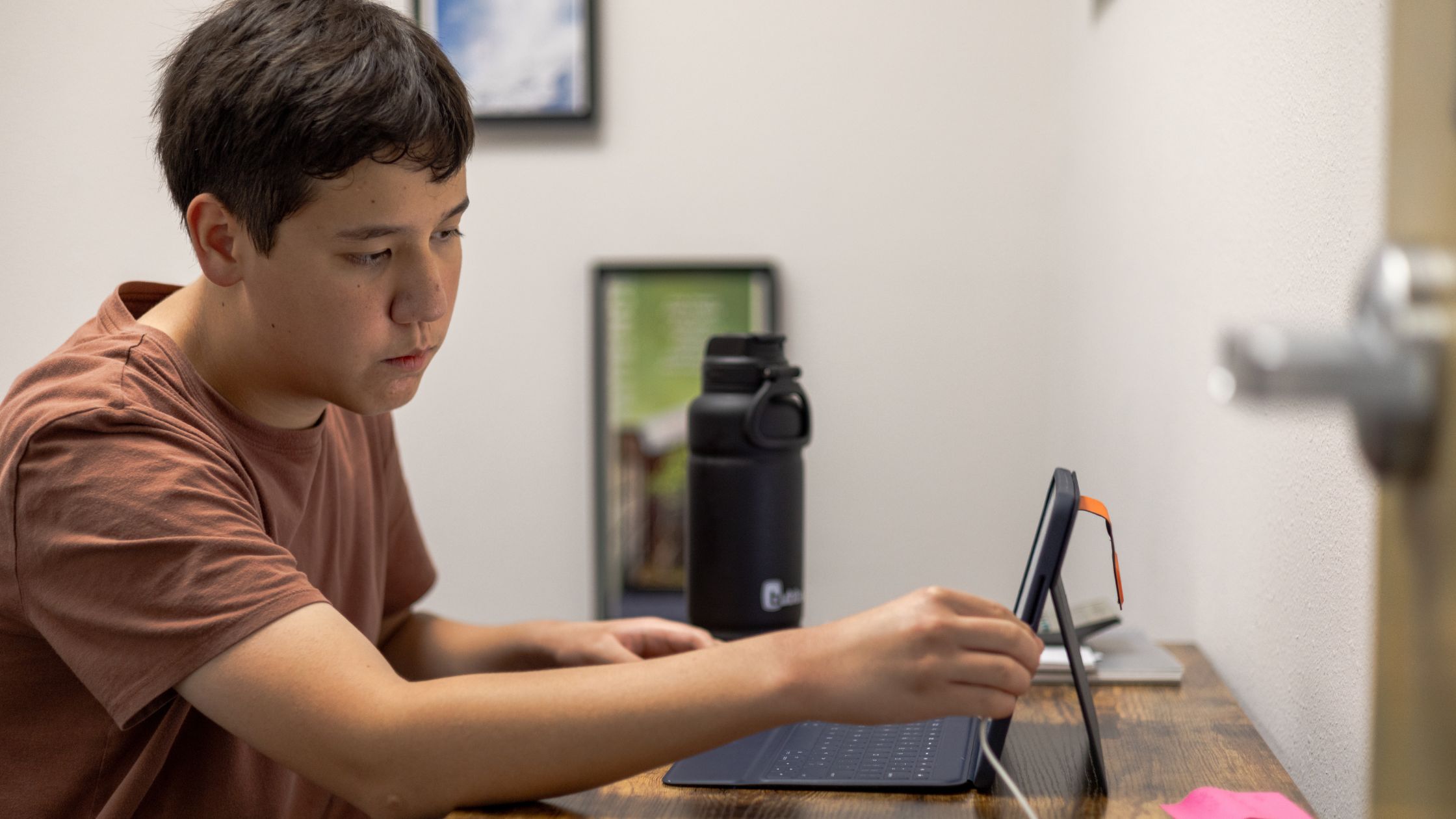
Does your teenager earn good grades but come home exhausted, anxious, or emotionally drained?
Many gifted and neurodivergent teens appear successful on the outside while quietly struggling with overwhelming stress, masking, and burnout. Their grades may look great, but their emotional well-being tells a very different story.
Sometimes, the greatest support for gifted neurodivergent teens is transferring them to an alternative high school that offers personalized education and smaller class sizes, fostering a whole-child experience.
Personalized Education For Young Adults Champions Brilliance While Reducing Stress
Grades should never be the primary indicator of whether a child is succeeding in school or not. It’s easy for parents to forget that a child is at school for far more waking hours than they are at home. As such, their day-to-day well-being depends on multiple factors beyond academic achievement, including their emotional and social well-being.
We know a child is thriving at school when they:
- Rarely complain about being bored at school.
- Look forward to going to school most days.
- Have a sense of belonging and acceptance.
- Have access to classes or electives that honor their interests or talents beyond college-prep courses.
- Have a reasonable degree of self-confidence, understanding that mistakes are inevitable, and knowing how to recover and grow from them.
For most neurodivergent teenagers, this is not their regular school day experience, even if they appear to be model students on paper.
Often, these students experience extreme perfectionism, high anxiety levels, struggles with executive function that cause them to work harder, and the sense that they don’t really belong within their public school culture. However, all of these things can go unnoticed by their teachers, parents, and peers because they become so good at masking their struggles.
At Legacy High School, neurodivergent teens experience what it’s like to be academically challenged without sacrificing their mental and emotional well-being. Despite perfect grades or stellar comments from teachers, highly successful students often mask a tremendous amount of stress, anxiety, self-doubt, and an excruciating sense that they don’t really “fit in.”
Masking and Burnout in Teens: A Common Side Effect of Traditional High Schools
It takes a huge expenditure of energy to be anything other than yourself. This is why masking and burnout are so common among teens and young adults in public education settings.
Masking is a term used to describe both the conscious and subconscious things we do to make ourselves look, act, and feel more like those around us. It is an exhausting way to live. While masking is a common behavior for both neurotypical and neurodivergent teens, there is no doubt that neurodivergent teens expend more energy trying to mimic their peers.
These diligent efforts often result in:
- Extreme fatigue.
- Higher anxiety levels.
- Depression.
- Insomnia.
- Isolation.
- High-risk behaviors to escape intense feelings or to “fit in” even more.
Over time, teens who mask their true feelings or work to cover up what they see as their “failings” experience intense burnout. That can have serious psychological ramifications.
Signs Your Teen Is Struggling or Experiencing Burnout
A recent study on teen burnout, conducted by researchers at the Harvard Graduate School of Education’s Center for Digital Thriving, Indiana University, and Common Sense Media, found that 81% of teens between the ages of 13 and 17 “…feel pressure that leaves them feeling bad about their game plans, achievements, appearances, social lives, [and] friendships…”
In addition to social media, these kids said the pressure comes from parents, teachers, and other adults in their lives, as well as from their peers and themselves. Of those 81%, nearly 30% report symptoms indicating burnout, especially around finals, paper/project due dates, test dates, or other periods when outside pressure on performance feels higher than usual.
Signs your teenager may be experiencing burnout include:
- Being unusually moody or irritable.
- Having trouble sleeping.
- Lacking solid friendships (they don’t go to others’ homes, never or rarely have friends over or get together with friends, nor do they talk about any particular friend).
- Pulling away from hobbies or activities they used to enjoy.
- Extreme changes in eating behavior (restrictive eating or overeating).
- Notable dip in self-confidence.
- Using self-deprecating or even hateful language or sentiments towards themselves.
Sometimes, due to cultural pressure, parents misunderstand the difference between “stress” and “burnout.” Stress can be healthy if it’s experienced in short bursts, motivating us to do our best, and if the outcome is positive.
Stress leads to burnout when it’s chronic, and teens feel there is no reprieve. Masking and burnout in teens intensify over time, especially as high school graduation looms and pressure mounts around university or future career choices.
This is where an alternative high school specializing in personalized education makes a tremendous difference in a child’s physical, mental, and emotional well-being.
Alternative High Schools Provide Personalized Support For Gifted & Neurodivergent Teens
Legacy High School, which serves grades 7–12, is a private school in Melbourne, Florida. We prioritize flexible, accredited academics within a positive school culture that provides calm structure, real connection with students and staff, and space for students to learn and grow without any threat of burnout.
Depending on the students’ abilities and goals, they enter one of three academic pathways:
- Standard.
- Honors.
- Dual Enrollment (in partnership with Liberty University) allows students to graduate from high school with an associate’s degree.
Focusing on personalized education for young adults, with an emphasis on supporting gifted and neurodivergent teens, we’ve seen firsthand how our approach to alternative learning serves every student – regardless of their label or diagnosis.
Here are some of the ways we transform the learning experience for our students, faculty, and staff.
1. Emphasis on Smaller Class Sizes
First, our classrooms are intentionally designed to accommodate student-to-teacher ratios of no more than 10:1. These small classes with realistic student-to-teacher ratios allow us to personalize instruction and home in on flexible routines that give students more time for subjects that require additional support.
Classroom designs are more like office suites than traditional classrooms, offering students a more soothing, comforting, and sensory-supported environment. This atmosphere immediately calms their nervous system, preventing or significantly minimizing sensory overload. Many students who’ve transferred to us from other middle or high schools tell us that this small classroom accommodation allows them to experience true, grounded focus for the very first time in their school journey.
2. Structured Routines With Plenty of Time to Transition
In a recent article on teen behavior, Tufts University researchers explain the complex biochemical and physiological changes occurring in adolescent brains. Even without a neurodivergent diagnosis, teen brains are wired to be more impulsive, reactive, emotionally intense, and prone to experience-based anxiety. To prevent this developmental dysregulation, schools and parents/caregivers must maintain predictable daily routines and academic rhythms. Doing so minimizes stress and helps teens feel secure and better focused.
Rooted in a 12-month academic calendar (July to June), students at Legacy High benefit from consistent daily schedules as they move from subject to subject or activity to activity. They have independent flexibility within a safe structure. Teachers and staff are very clear in outlining expectations, so students always know where they’re to be, what they’re to do, what’s coming next, and the expected way to transition in between.
3. Unrivaled Emotional Support
Our staff is highly trained to provide students with the emotional and behavioral support they need to succeed. All of our teachers engage in ongoing professional development to stay at the forefront of educational best practices, which includes implementing scientifically proven ABA therapeutic strategies that instill in our students long-term confidence and evidence that, in the right setting, they can achieve their goals without high levels of anxiety, stress, or burnout.
In addition to accredited academics, students at Legacy High School learn real-world, everyday and job-relevant skills that instill an unshakable belief in their competence after graduation.
Tour a High School Where Your Child Can Discover Their Full Potential
Would you and your student like to see what it’s like to attend a school where they can discover their true potential and flourish? Legacy High School is a private high school for teens that Melbourne, FL, parents turn to when their students are tired of feeling overwhelmed, anxious, burnt out, or not fitting in.
We want them to recognize and celebrate their brilliance in a community that reflects their worth back to them. Legacy High School’s Financial Flex Tuition and scholarship programs make our program as equitable as possible. Call our Admissions Office at 321-345-4232 or contact us online to schedule a tour and experience the difference for yourself.